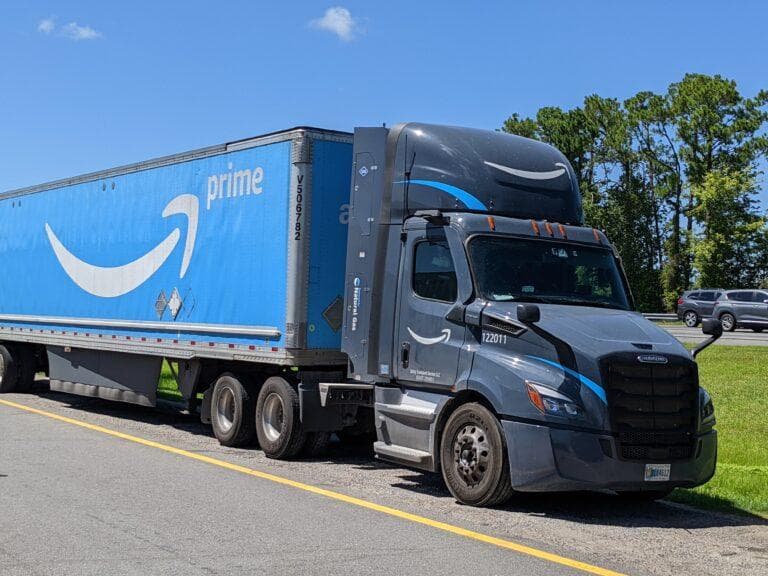
How Amazon-Related Truck Driving Jobs Are Structured
Amazon-related driving jobs are not all the same. Some drivers may work directly in Amazon logistics roles, while others may work for Delivery Service Partners, Amazon Freight Partners, independent carriers, or trucking companies that use Amazon Relay. Amazon’s official delivery driver hiring page notes that some driver roles require only a valid driver’s license and that a non-CDL license may be acceptable for certain delivery roles.
For heavier freight and tractor-trailer work, Amazon Freight Partner opportunities generally focus on CDL-A truck driver positions offered through participating partner companies. Amazon’s Freight Partner jobs site describes these as professional driving opportunities with Amazon Freight Partners, not necessarily direct Amazon employment.
This distinction matters because pay structure, schedule, benefits, vehicle type, licensing requirements, and employer responsibilities may vary depending on whether the role is through Amazon, a local delivery partner, a freight partner, or an independent carrier.
Common Types of Amazon-Related Driving Roles
Local Delivery Driver Roles
Some Amazon-related delivery roles involve driving vans or smaller commercial vehicles for local package routes. These may appeal to people searching for Non CDL Truck Driving Jobs or local delivery positions. Requirements often include a valid driver’s license, safe driving history, physical ability to load and deliver packages, and availability for scheduled shifts. Specific requirements vary by employer, location, vehicle type, and route.
These roles may not be the same as a traditional Truck Driving job involving tractor-trailers. However, they can provide experience in route management, customer delivery, vehicle inspection, and logistics operations.
Amazon Freight Partner CDL-A Roles
Amazon Freight Partner roles are more closely connected to tractor-trailer freight work. These positions may involve moving trailers between Amazon facilities, freight yards, or regional logistics points. Since heavy and tractor-trailer drivers must have a commercial driver’s license, CDL requirements are an important factor for applicants considering this path. The U.S. Bureau of Labor Statistics states that heavy and tractor-trailer truck drivers must have a CDL.
Applicants interested in these roles should review the job posting carefully to confirm whether the position is local, regional, overnight, full-time, part-time, or rotating schedule.
Amazon Relay and Carrier Opportunities
Amazon Relay is designed for approved carriers and owner-operators rather than casual job applicants. Amazon Relay states that carriers need requirements such as a DOT number with interstate authority, a valid MC number, appropriate carrier entity type, and acceptable FMCSA safety rating.
This path is usually more relevant for business owners, trucking companies, or independent carriers than for someone looking for entry-level Truck Driving Jobs. It may involve business expenses, insurance, compliance responsibilities, equipment costs, and contract management.
CDL vs. Non-CDL Truck Driving Jobs
One of the most important decisions for job seekers is whether to pursue CDL or non-CDL work.
A CDL is required for certain commercial motor vehicles. The Federal Motor Carrier Safety Administration explains that drivers have been required to hold a CDL for certain commercial vehicles since April 1, 1992, and CDL standards are tied to vehicle type and operation. FMCSA also notes that obtaining a CDL requires passing knowledge and skills testing designed for commercial vehicle operation.
Non-CDL roles may include delivery vans, smaller box trucks, and certain local delivery vehicles, depending on vehicle weight, cargo, state rules, and employer policies. These jobs may be easier to enter for people without commercial driving experience, but they may also offer different pay ranges, schedules, and advancement paths compared with CDL-A roles.
Driving Option | Typical Vehicle Type | CDL Usually Required? | Common Considerations |
|---|---|---|---|
Local package delivery | Van or smaller delivery vehicle | Often no | Physical workload, route timing, customer delivery |
Non-CDL box truck | Smaller commercial truck | Depends on vehicle and use | Local routes, vehicle weight, employer rules |
CDL-A freight driver | Tractor-trailer | Yes | CDL training, safety rules, longer shifts |
Carrier/owner-operator | Tractor, trailer, business equipment | Usually yes | Insurance, DOT authority, contracts, operating costs |
Part-Time Truck Driving Jobs: What to Consider
Many people search for Part Time Truck Driving Jobs because they want flexible income, weekend shifts, supplemental work, or a schedule that fits family or school responsibilities. Part-time roles may exist in local delivery, seasonal logistics, warehouse-to-store transport, shuttle driving, or smaller commercial delivery.
However, “part-time” can mean different things. Some employers define it as fewer weekly hours, while others may require weekend availability, early mornings, late nights, or variable routes. Job seekers should review:
Schedule consistency
Expected weekly hours
Vehicle type
Physical lifting requirements
Local vs. regional driving
Overtime rules
Benefits eligibility
Training period requirements
Background check and driving record standards
For an Amazon Local Truck Driver or Amazon-related delivery role, the schedule may depend on local route demand, delivery volume, peak seasons, and the hiring partner.
Comparing Amazon-Related Roles with Other Truck Driving Companies
People researching Truck Driving Companies should compare Amazon-related opportunities with regional carriers, national freight companies, private fleets, courier services, construction suppliers, food distribution companies, and local moving or delivery companies.
A strong comparison should include more than pay. Consider:
Licensing and training requirements
Safety record and compliance expectations
Home-daily or overnight schedule
Equipment quality
Route type
Paid time off and health benefits
Driver support
Load type
Advancement opportunities
Employment vs. contractor classification
For CDL roles, applicants should also understand hours-of-service rules, medical certification requirements, drug and alcohol testing, and employer safety policies.
Industry Outlook for Truck Drivers
Truck driving continues to be a large occupation in the United States. The Bureau of Labor Statistics reported that the median annual wage for heavy and tractor-trailer truck drivers was $57,440 in May 2024. BLS also states that these drivers usually need a high school diploma or equivalent, attend professional truck driving school, and must have a CDL.
Job availability can vary by region, economic conditions, fuel costs, shipping demand, seasonality, and company hiring needs. Local delivery jobs may be more common in urban and suburban areas, while regional freight roles may depend on logistics corridors, warehouse locations, and distribution networks.
How to Evaluate a Truck Driving Job Posting
Before applying for any Truck Driving job, review the posting carefully. A high-quality listing should clearly explain the employer, vehicle type, route type, license requirement, schedule, pay structure, benefits, and basic qualifications.
Be cautious with job ads that make unusually broad claims, such as guaranteed high pay, no requirements, instant certification, or automatic hiring. Reuters reported that a viral notice claiming a free CDL course from the U.S. State Department was false, and FMCSA clarified that states issue CDLs. This is a useful reminder to verify CDL training and job claims through official or reputable sources.
Applicants should also confirm whether a role is direct employment, partner employment, contractor work, or carrier-based work. That difference can affect taxes, benefits, insurance, schedule control, and legal responsibilities.
Practical Steps Before Applying
A careful applicant can start by identifying whether they want local delivery, non-CDL work, CDL-A freight, or owner-operator opportunities. Then they can compare several employers and review official job pages instead of relying only on social media posts or promotional ads.
For non-CDL roles, make sure the vehicle type and license requirement match your current credentials. For CDL roles, confirm whether the employer requires existing CDL-A experience, offers training support, or only hires already licensed drivers. For carrier opportunities, review DOT authority, insurance, equipment, safety rating, and contract terms before committing business resources.
Conclusion
Amazon-related truck driving opportunities can include local delivery, non-CDL driving, CDL-A freight partner roles, and carrier-based Amazon Relay work. Each option has different requirements and responsibilities. People searching for Part Time Truck Driving Jobs, Non CDL Truck Driving Jobs, Truck Driving Jobs, or an Amazon Local Truck Driver role should compare licensing requirements, employer type, schedule, route expectations, and total compensation before applying.
A thoughtful approach helps job seekers understand whether a role fits their experience, availability, and long-term career goals. Because transportation jobs can vary widely by location and employer, applicants should use official job listings, government licensing resources, and reputable labor data when making decisions.
DISCLAIMER
This article is for general informational purposes only. Job availability, pay, benefits, schedules, licensing requirements, and eligibility rules may vary by employer, location, vehicle type, and current regulations. Readers should verify details directly with official job postings, state licensing agencies, employers, and relevant transportation authorities before applying.
REFERENCES
U.S. Bureau of Labor Statistics — Heavy and Tractor-Trailer Truck Drivers
Federal Motor Carrier Safety Administration — Commercial Driver’s License Program
Amazon Jobs — Delivery Driver Jobs
Amazon Freight Partner Jobs
Amazon Relay — Carrier and Freight Network Requirements
Reuters Fact Check — CDL Course Misinformation Verification