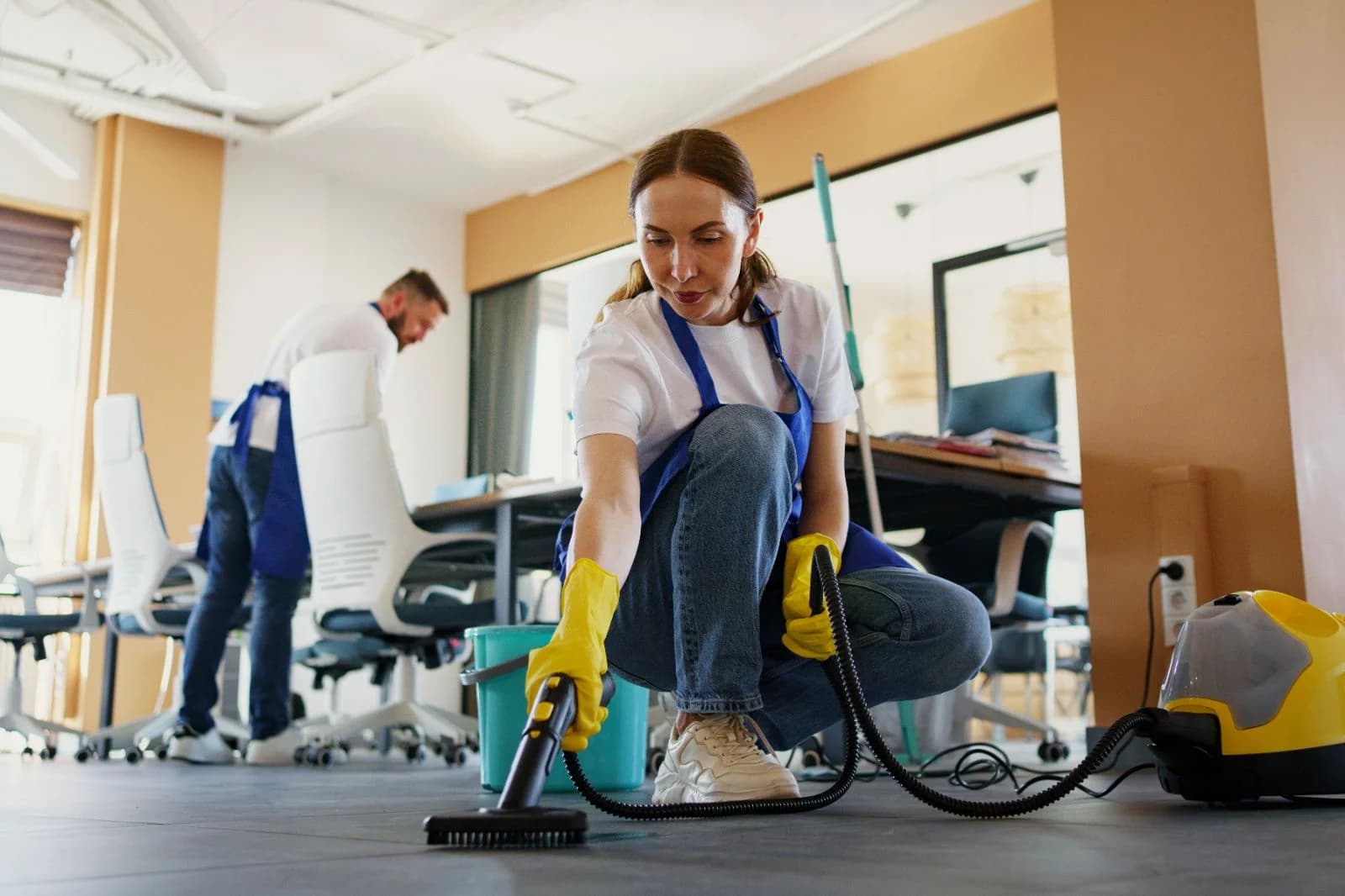
Understanding Commercial Cleaning Jobs
Commercial cleaning generally refers to cleaning services performed in business or institutional settings rather than private homes. These may include office buildings, schools, retail spaces, medical offices, warehouses, restaurants, and public facilities.
A commercial cleaning role may involve routine tasks such as:
Cleaning Area | Common Tasks |
|---|---|
Office areas | Dusting, vacuuming, trash removal, surface wiping |
Restrooms | Sanitizing fixtures, restocking supplies, mopping floors |
Break rooms | Cleaning counters, tables, sinks, and appliances |
Entryways | Sweeping, glass cleaning, mat maintenance |
Floors | Vacuuming, mopping, buffing, or carpet care |
High-touch surfaces | Door handles, switches, shared desks, railings |
Commercial cleaning is often scheduled outside regular business hours, such as early mornings, evenings, or overnight. Some positions are full-time, while others may be part-time or assigned by contract.
Office Cleaning Services: What Workers Usually Do
Office cleaning services focus on maintaining work environments used by employees, clients, and visitors. In a typical office setting, cleaners may be responsible for general office cleaning such as vacuuming carpets, emptying trash bins, wiping desks or shared surfaces, cleaning windows or glass partitions, and maintaining restrooms.
Cleaning services for offices may also include periodic tasks such as carpet extraction, floor polishing, upholstery cleaning, or deep cleaning office spaces after renovations, seasonal changes, or high-traffic events.
Office cleaner jobs may require attention to detail because workers often clean around desks, computers, files, and shared equipment. Employers may provide instructions on which areas should not be moved or touched, especially in offices with confidential documents or specialized equipment.
Industrial Cleaning vs. General Office Cleaning
Industrial cleaning is usually more specialized than general office cleaning. It may take place in factories, warehouses, manufacturing plants, distribution centers, food processing facilities, or other operational sites.
Industrial cleaning may involve larger spaces, heavier equipment, stricter safety rules, and exposure to materials that require careful handling. Workers may clean production floors, machinery areas, storage zones, loading docks, or high-dust environments. Depending on the site, industrial cleaning may require training related to chemicals, personal protective equipment, lockout procedures, or hazard communication.
OSHA notes that cleaning industry employees may face hazards related to chemicals, equipment, physical tasks, and the work environment itself. For this reason, industrial cleaning positions often place greater emphasis on safety procedures than basic office cleaning roles.
Deep Cleaning Office Spaces
Deep cleaning office work goes beyond routine maintenance. It may be scheduled weekly, monthly, quarterly, or after special events. A deep cleaning office assignment might include cleaning baseboards, detailed restroom sanitation, disinfecting high-touch points, cleaning behind furniture, washing interior glass, steam cleaning carpets, or removing built-up dust in vents and corners.
Deep cleaning can be physically demanding because it may require bending, lifting, moving light furniture, or using specialized tools. It may also involve stronger cleaning products than those used in daily maintenance, which makes training and proper labeling important.
Employers should provide clear instructions on product use, dilution, ventilation, and protective equipment where required. OSHA’s cleaning industry standards page explains that cleaning hazards are addressed under general industry standards and related safety documents.
Skills That May Help in Commercial and Office Cleaner Jobs
Many office cleaner and commercial cleaner roles do not require a college degree, but employers may look for reliability, time management, attention to detail, and the ability to follow written or verbal instructions. Some roles require workers to complete tasks independently after a checklist is provided.
Useful skills may include:
Understanding cleaning product labels and safety instructions
Following a room-by-room cleaning schedule
Using vacuums, mops, carts, floor machines, or basic tools
Communicating with supervisors about supply needs or hazards
Respecting workplace privacy and property
Maintaining consistent quality during repetitive tasks
For more specialized roles, applicants may benefit from experience with floor care, carpet equipment, industrial cleaning, medical office cleaning, or sanitation protocols.
Work Schedules and Job Settings
Cleaning jobs can vary widely by employer and client site. Office cleaning services may be scheduled after employees leave for the day, while schools, hospitals, hotels, and public buildings may require daytime or rotating shifts. Industrial cleaning may be scheduled around production hours to avoid disrupting operations.
Common employers include cleaning contractors, facility management companies, schools, healthcare facilities, property management firms, warehouses, and large corporations with in-house maintenance teams.
Applicants should review job postings carefully for details such as shift time, work location, required transportation, physical requirements, background checks, uniform expectations, and whether the role is temporary, contract-based, part-time, or full-time.
Safety and Chemical Awareness
Safety is a major part of cleaning work. Cleaning chemicals, wet floors, ladders, electrical equipment, and repetitive movement can create risks if procedures are not followed. Workers should understand when gloves, goggles, masks, or other protective equipment are required.
The EPA’s Safer Choice program helps consumers, businesses, and purchasers identify products that perform while using ingredients considered safer for human health and the environment. The EPA also provides a searchable list of products that meet the Safer Choice Standard.
This does not mean every workplace uses the same products. Some facilities may require disinfectants, degreasers, floor chemicals, or specialty products suited to the site. Workers should avoid mixing chemicals unless specifically trained, because unsafe combinations can create harmful fumes.
Questions to Consider Before Applying
Before applying for a commercial cleaning or office cleaning job, candidates may want to compare several practical factors:
Factor | Why It Matters |
|---|---|
Shift hours | Evening, overnight, or early morning work may affect transportation and routine |
Worksite type | Offices, warehouses, schools, and medical sites may have different requirements |
Physical duties | Some jobs require lifting, standing, bending, or operating equipment |
Training provided | Chemical safety and equipment training can be important |
Employment type | Contractor, employee, temporary, or part-time status may affect benefits |
Travel requirements | Some cleaners travel between multiple client locations |
Supplies and uniforms | Some employers provide equipment; others may have specific requirements |
A careful review of these details can help applicants understand whether a position fits their schedule, experience level, and work preferences.
Career Development in Cleaning Services
Commercial cleaning can be an entry point into broader facility services. Workers may move into lead cleaner, site supervisor, floor technician, quality inspector, or operations coordinator roles. Some may specialize in carpet care, hard floor maintenance, industrial cleaning, medical facility cleaning, or post-construction cleanup.
Experience with safety procedures, client communication, inventory management, and team coordination may support advancement. However, career paths vary by employer, location, contract size, and business needs.
Conclusion
Commercial and office cleaner jobs play an important role in maintaining safe, organized, and professional work environments across the United States. General office cleaning, deep cleaning office services, commercial cleaning, and industrial cleaning each involve different tasks and expectations. Applicants should review job duties, schedules, safety requirements, training, and worksite conditions before applying.
For employers and workers alike, clear procedures, proper training, and responsible product use are central to maintaining quality and safety. People considering cleaning services for offices or employment in the cleaning industry can benefit from comparing options carefully and understanding how each role typically works.
Disclaimer
This article is for general informational purposes only. Job duties, pay, schedules, training requirements, eligibility rules, and workplace conditions may vary by employer, provider, state, location, and contract terms.
References
U.S. Bureau of Labor Statistics, Occupational Outlook Handbook: Janitors and Building Cleaners
Occupational Safety and Health Administration: Cleaning Industry Overview and Standards
U.S. Environmental Protection Agency: Safer Choice Program and Safer Choice Product Search